

Meet Dr. Aleksandar Milincic, an accomplished executive coach, IT leadership strategist, and proud Doctor of Business Administration (DBA) alumnus of SSBM Geneva. With a research focus on how AI shapes organizational culture in fast-growing teams across Southeast Europe, Dr. Milincic brings a unique blend of strategy, leadership, and human insight to every engagement.
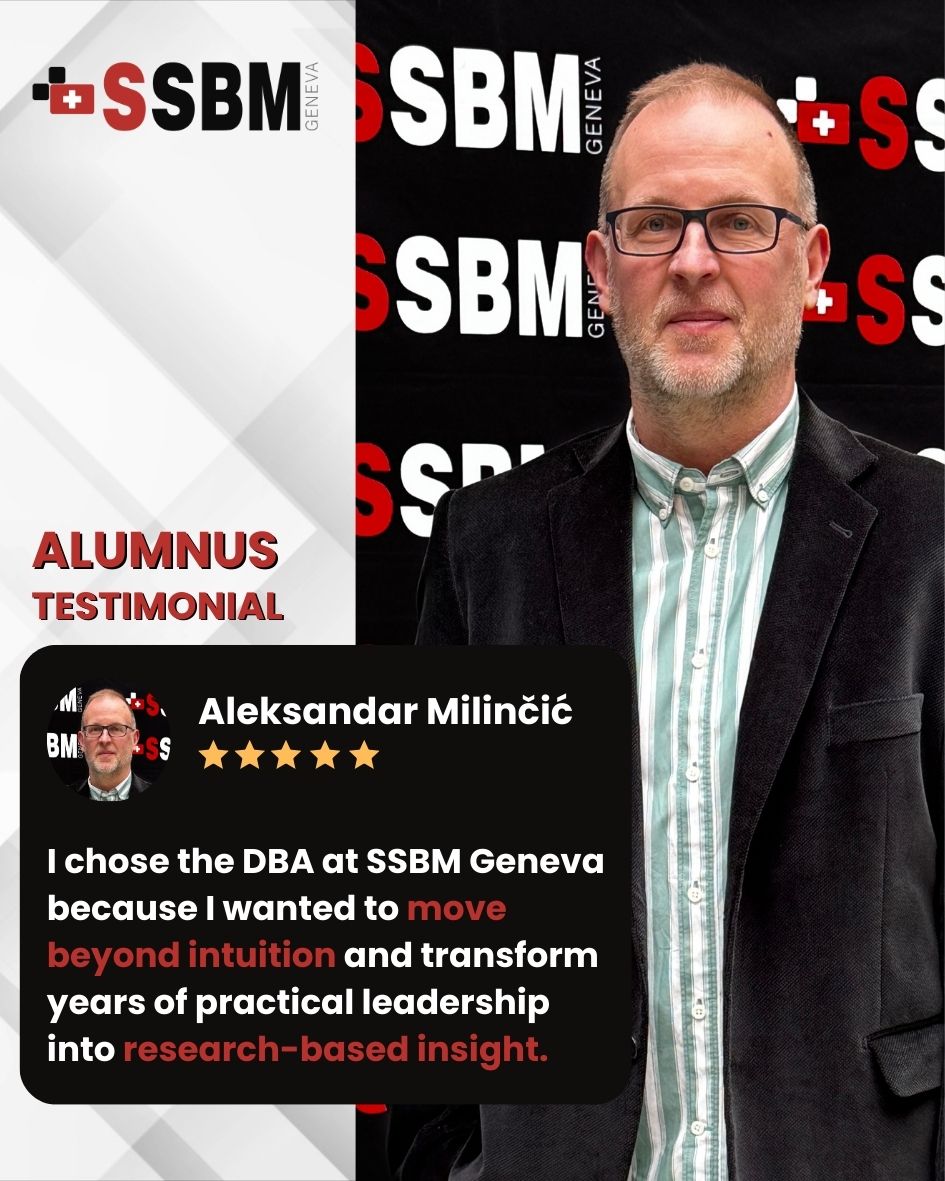
After 25 years in the software industry across Southeastern Europe, serving in executive roles within SMEs, I reached a point where experience alone was no longer enough. I felt it was time to invest in a long-standing passion and turn it into a structured, academic inquiry. I chose the DBA at SSBM Geneva because I wanted to move beyond intuition and transform years of practical leadership into research-based insight. I felt a strong need to explore deeper, to understand what truly drives organizational culture and what makes it sustainable under pressure. Having witnessed how culture shapes performance, especially in the context of rapid AI-driven transformation, I wanted to examine that dynamic systematically and rigorously. The DBA gave me the framework to search for what I often called the “secret sauce” of organizational culture, not as a metaphor, but as a measurable and researchable phenomenon.
The discipline of questioning assumptions, definitely. The DBA process forced me to distinguish between what I believe and what I can empirically support. It reshaped my view of leadership as not only decisiveness and vision, but also intellectual humility and evidence-based thinking.
The biggest shift was learning how to operationalize theory. Through a mixed-methods approach in my dissertation, I combined cultural frameworks with measurable indicators and real employee narratives. That allowed me to move from abstract discussion about culture to diagnosing concrete misalignments between leadership, teams, and AI integration. Reaching that level of clarity and practical applicability was something I had aspired to for years.
Both of my books emerged from reflection on transformation, leadership, identity, and growth. I draw inspiration from real tensions inside organizations and within individuals, and from those quiet early mornings when the world is just beginning to wake up, inviting introspection, self-examination, and a constant search for meaning and essence. Research gives structure to my thinking; writing allows me to explore the human dimension that lives beneath systems, strategy, and performance.
The intellectual rigor and long-term discipline required to complete the dissertation while leading professionally strengthened both my analytical thinking and my resilience.
The DBA journey also gave me something more personal. In my fifties, it became an opportunity to test once again the strength of my commitment, to rediscover the beauty of perseverance, and to connect with people from different parts of the world who share the same core human values.
Choose a topic that truly matters to you, not the one the world is currently hungry for, but the one that keeps you intellectually awake. Let the process challenge your assumptions. Read as much as you can. There is an immense amount of wisdom already written. Many times I was convinced the direction was clear, only to discover, through new evidence and deeper study, that the path had shifted. That is not a weakness; it is growth.
Listen carefully to your mentor. Their experience will save you time, but more importantly, it will sharpen your thinking. In the end, what you receive is not simply a title. The real value of a DBA is the transformation of how you think, analyze, question, and ultimately make decisions.