

At SSBM Geneva, sustainability has become a defining pillar of its academic and operational model. Building on the introduction of the Sustainability Cockpit in 2023 and the strong momentum observed in 2025, the 2026 results confirm a continued acceleration of environmental impact across all key indicators.
Rather than incremental improvement, SSBM Geneva’s data now reflects a scaled transformation—driven by digital-first education, reduced physical infrastructure dependency, and a consistently engaged global community.
By 2025, SSBM Geneva had already achieved 186,135.63 commute hours saved, reflecting the widespread adoption of online and hybrid learning.
In 2026, an additional 247,268.13 hours were saved, bringing the cumulative total to: 433,403.76 commute hours saved. This milestone highlights a major shift in how education is delivered—reducing travel demands while improving accessibility and work-life balance for students worldwide.

By 2025, SSBM Geneva had avoided 123,486.03 kg of plastic waste through paperless systems and digital workflows.
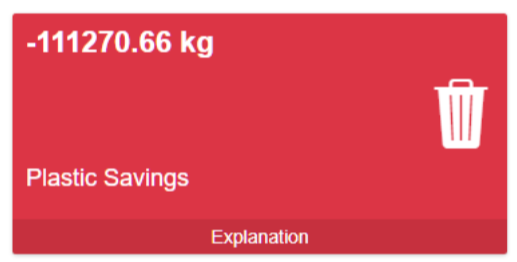
In 2026, the institution avoided a further 111,270.66 kg, resulting in a total impact of: 234,756.69 kg of plastic waste avoided. This reflects a deepening institutional commitment to sustainable resource use and reduced reliance on physical materials.
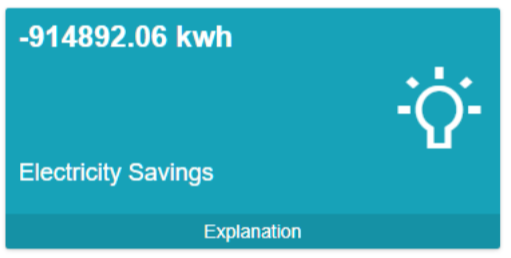
Energy optimization remained a key priority through 2026. Following 1,015,330.81 kWh saved in 2025, an additional 914,892.06 kWh was reduced in 2026. Total electricity savings: 1,930,222.87 kWh. This achievement demonstrates the effectiveness of scalable cloud systems and optimized digital learning environments in reducing overall energy consumption.
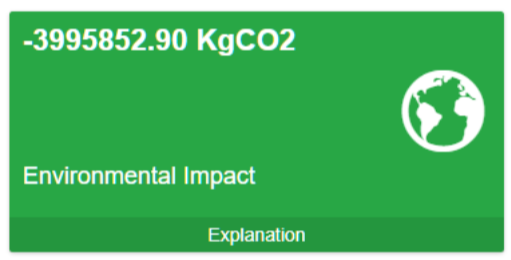
SSBM Geneva’s carbon reduction efforts have seen the most dramatic growth. After reaching 3,007,951.70 kg of CO₂ saved by 2025, the institution added another 3,995,852.90 kg in 2026. This represents over 7,000 metric tons of CO₂ emissions prevented, underscoring the significant environmental benefits of the institution’s digital-first strategy.
The Sustainability Cockpit has evolved from a reporting mechanism into a strategic framework guiding decision-making across SSBM Geneva. It not only measures environmental impact but actively reinforces behaviors that drive continuous improvement.
The 2026 results confirm a clear trajectory: sustainability at SSBM Geneva is no longer an initiative—it is embedded in the institution’s identity and operational DNA.
As the institution moves forward, the focus is not just on maintaining impact, but on expanding it through innovation, scalability, and global accessibility in education.